How to Build a Fall Charcuterie Board Without Going Broke
- 1
Keyword
fall charcuterie board ideas
- 2
Article ideas
Angle chosen
- 3
Article
Approved
- 4
Image ideas
2 chosen
- 5
Images
2 kept
- 6
Layout
0 of 2 placed
- 7
Pins
3 to review
- 8
Publish
Live
Already decided
Article ideasAngle chosenopen
A focus on 'pantry-staple' boards that don't require an expensive trip to the specialty grocery store.
Most boards look great but cost fifty dollars to assemble. This guide focuses on using grocery store basics—think honey-mustard pretzels, generic cheddar, and seasonal fruits—to build something that looks expensive but actually fits into a weekly budget.
Candidate titles
- How to Build a Fall Charcuterie Board Without Going Broke
- The Pantry-Staple Autumn Board: A Low-Cost Guide
- Fall Entertaining: Feeding a Crowd on a Grocery Store Budget
ArticleApprovedopen
It was approved to be
A focus on 'pantry-staple' boards that don't require an expensive trip to the specialty grocery store.
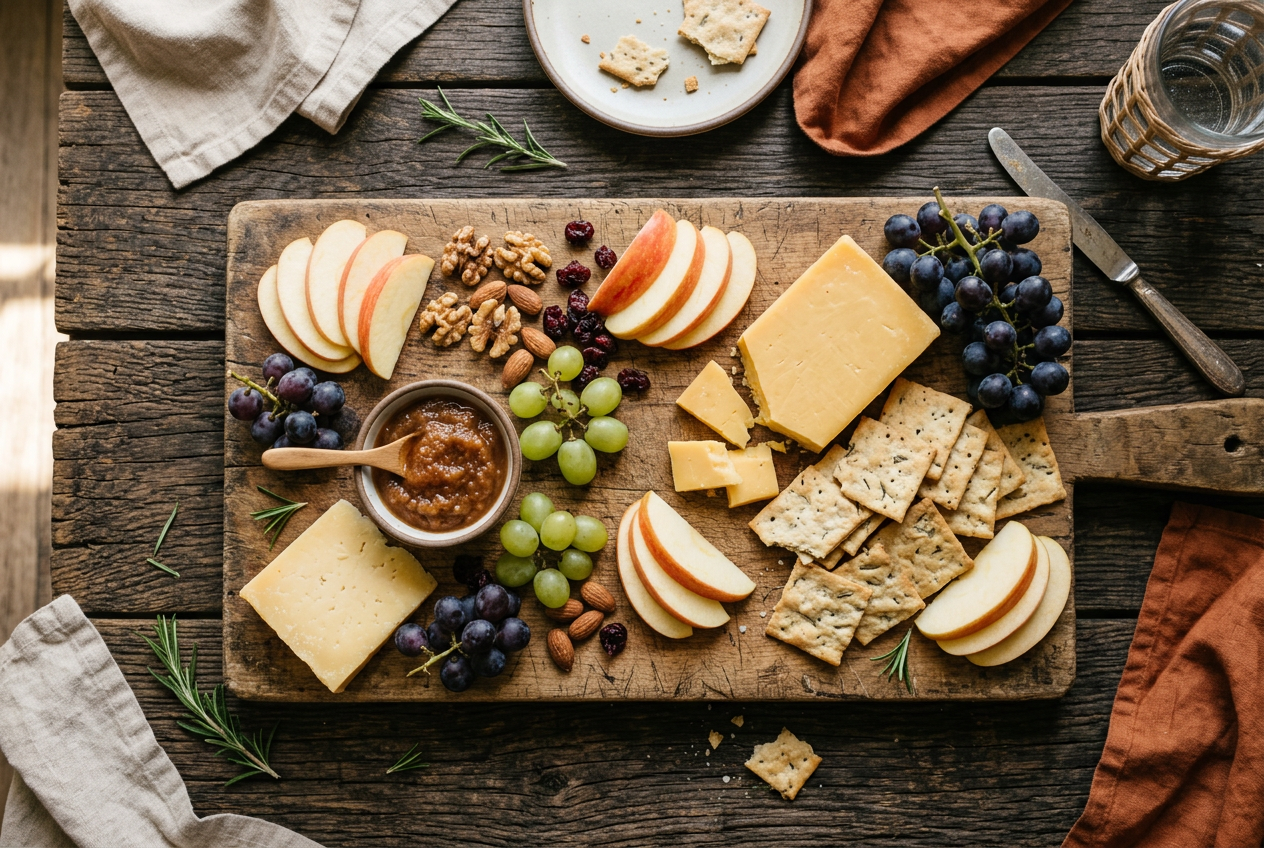
I assembled what I thought was an impressive fall charcuterie board last week using ingredients from my regular grocery run: a wedge of Vermont cheddar I'd been meaning to use, some honeycrisp apples about to turn mealy, pretzels from the bulk bin, and a jar of apple butter that's been living in my pantry since August. My neighbor came over and asked where I'd ordered it from. It cost me under twelve dollars.
This is the opposite of those magazines boards—the ones with five types of imported salami, burrata that costs more than my mortgage, and berries arranged like they're about to be photographed for a coffee table book. Those are beautiful. They're also usually somewhere between forty and eighty dollars for a board that feeds maybe eight people if you're not hungry.
You can build something that looks equally intentional and actually tastes good using things that were already in your house or cost under two dollars at the regular supermarket. The trick isn't finding rare ingredients. It's understanding proportion, contrast, and the fact that repetition is your friend when you're working with a budget.
1. Start with what you have
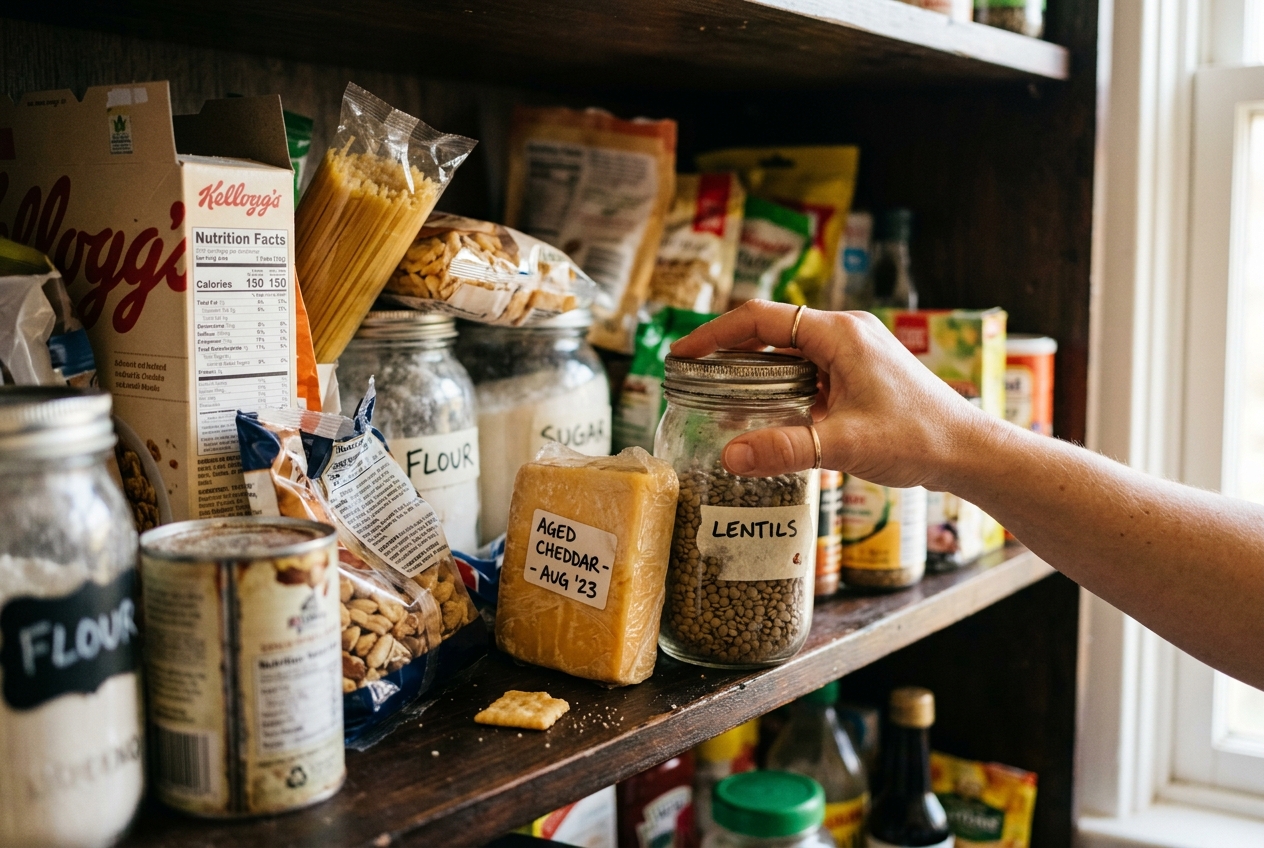
Before you step foot in a store, spend ten minutes looking at what's already sitting around. That mostly-full jar of apricot jam, the block of sharp cheddar you were saving for something fancy, the crackers in the pantry you didn't know how to use up. Fall charcuterie boards are actually a legitimate strategy for using the food sitting around from September.
Check your fridge for things that can anchor a board: aged cheddar, gouda, even basic Swiss. Honestly, a mix of three supermarket cheeses looks substantially more impressive than one expensive one, because variety reads as intentionality. One wedge of fancy imported cheese sits there looking lonely. Three different types of regular cheese say you planned this.
Same with crackers, pretzels, and bread. You probably have something already: saltines, wheat crackers, that half-finished box of Triscuits. Throw those in. Abundance and mixing textures is the actual principle here.
2. Build with three or four cheeses, not six
The expensive boards you see are doing three cheeses. Maybe four if they're being generous. Not because more is worse, but because three different cheeses actually creates a story—a soft one, a hard one, a medium one. It forces you to think about variety instead of just piling things on.
For a fall board that serves six to eight people, aim for: one aged hard cheese (a Vermont white cheddar, which is about four dollars for a wedge), one semi-firm (gouda is predictable but works, and generic supermarket gouda is fine), and one soft cheese (cream cheese cost-wise, but you can also use a plain brie if you see one on sale, or even a good quality cheddar spread—yes, really).
Buy them all the same day, two weeks before you need the board if you can. Cheese gets better as it sits in your fridge. It develops flavor. By the time your friends arrive, that five-dollar cheddar wedge will taste better than it did on purchase day.
If you do the math: three cheeses at roughly four to six dollars each is eighteen dollars maximum for cheese. But visually, three different types with different colors and shapes reads expensive.
3. Lean on one really good pantry condiment
This is where the board stops looking like you just grabbed things and starts looking intentional. You need one thing that makes people pause slightly and ask what it is.
For fall, this is apple butter, hot honey, or a spiced jam. You probably already have apple butter in your pantry from September. If not, it's about three dollars. A jar sits there looking beautiful, adds a seasonal note, and gives people something to do besides just eat cheese.
The psychology of boards is that people want to be slightly confused. Why is this here? What do I do with it? Then they try the jam with the cheddar and feel like they've discovered something. That moment is free. That jar costs three dollars.
Other cheap condiment wins for fall: a small jar of hot honey from the regular condiment aisle (about two dollars), any mustard that isn't yellow, even a small container of honeycomb if you can find it cheap (Target sometimes has fall-specific honey products for under four dollars).
One condiment. Not three. One thing that makes the board feel composed rather than chaotic.
4. Do apples, grapes, and whatever fall fruit is on sale
This is the thing about seasonal boards: the fruit is literally designed to be cheap right now. Apples, pears, grapes, the occasional fig if you're lucky. Buy whatever is marked down.
For a board serving six to eight, buy two or three different types of apple and two or three pears if they're in season. Cut them in half lengthwise, then into thin slices. Arrange them overlapping slightly. This is a real estate trick—overlapping fruit looks full and considered, whereas scattered fruit looks like you ran out of things.
Grapes are the secret weapon here. Red grapes, green grapes, whatever—they're usually under two dollars a bunch. They're cheap filler that looks intentional. They add color. They bridge the gap between the cheese and the fruit. Buy two bunches.
Fresh cranberries, if they're in season where you are, are three dollars and sit on a board looking like garnish but actually tasting fine. Dried cranberries work too and last indefinitely, so you can buy a box now for basically every board you'll make this fall.
Avoid anything that requires a specialty store or is out of season. You're looking at regular-produce-aisle fruit. What's on sale is already doing the work for you.
5. Use crackers, pretzels, and bread you can buy anywhere
This is genuinely where people overspend. There are fancy cracker brands that cost six dollars for a small box. You do not need them.
Buy: one box of plain saltines (eighty cents), one box of whole wheat crackers (two dollars), one box of something with seeds or flavor (like Triscuits or an Everything cracker—two to three dollars). That's your cracker situation for under six dollars.
Pretzels from the bulk bin or a regular bag (two to three dollars) give you something sturdier. Honeycrisp or cinnamon pretzels are slightly fancier-reading and usually cost the same as regular ones.
Bread: one small loaf of something with texture. Not white bread. Something with seeds or whole grain, sliced thin and toasted in your oven at 375 for about five minutes. You probably have this already. If not, it's two dollars.
The rule here is: you want contrast in texture and shape. Thin crackers, fat pretzels, bread chips. This variation is what makes boards look composed. One type of cracker, repeated, looks sparse. Three types looks intentional.
6. Add nuts (toasted, mixed, whatever you have)
Almonds, candied walnuts, or even plain peanuts from the bulk bin give boards texture and substance. A small handful costs maybe a dollar.
If you want to toast nuts at home: spread them on a sheet pan, toss with a tiny bit of oil and salt or cinnamon-sugar, and roast at 350 for about eight minutes. They'll smell incredible and taste infinitely better than store-bought. You probably have oil and cinnamon already.
Nuts also make the board feel less aggressively cheese-forward, which matters if you're feeding people who don't eat a lot of dairy or who just need some variety.
7. Make the board look full with height and repetition
The actual assembly: use a large wooden board or a platter you already own. Arrange your cheeses first. Leave space. Add nuts. Then add the crackers and bread, standing some upright at angles rather than laying everything flat. This creates height.
Add the grapes in small clusters. Overlap the apple and pear slices. Put the jam or condiment in a small bowl in the center or off to one side—not in a corner, as if you're hiding it.
The principle is: full but not chaotic. Things touching. Some overlapping. Small gaps where people can actually reach and grab without playing Jenga with the board.
Repetition matters. Multiple piles of the same cracker. Three small groups of grapes. Several apple slices rather than scattered single ones. Repetition at a budget level reads as "I thought about this" rather than "I bought one of everything and hoped it worked."
8. Assemble the day-of or the morning-of
This is the practical part that matters. Apple slices oxidize. Cheese starts to dry at the edges. Crackers go soft.
Prep everything the day before: cut fruit, toast bread, put things in small bowls. Keep it all in the fridge in separate containers.
Assemble the actual board two to three hours before people arrive. This is the goldilocks zone—it looks fresh, nothing has started to wilt, but you've still done the actual work.
9. Work backward from your budget
If you're spending under thirty dollars for a board that serves six to eight: that's your ceiling. Here's how it breaks down:
- Cheese: fifteen to eighteen dollars
- Crackers, pretzels, bread: six dollars
- Fruit: five to six dollars
- Nuts: one to two dollars
- Condiment: three to four dollars
- Garnish and odds and ends: one to two dollars
You'll come in under budget nearly every time because you're not buying specialty items or premium brands. You're being thoughtful about what you're buying instead of shopping based on aesthetics.
If you see something on sale that isn't on this list—good bread, fancy crackers, something that excites you—buy it. Just cut somewhere else. The board is flexible because the principle is proportion, not ingredients.
---
**Fall Charcuterie Board Budget Breakdown**
| Item | Quantity | Cost | |------|----------|------| | Hard cheese (cheddar, aged) | 1 wedge | $5 | | Semi-firm cheese (gouda) | 1 wedge | $4 | | Soft cheese (brie or spread) | 1 wedge | $4 | | Crackers (3 types, mixed) | 3 boxes | $5 | | Pretzels | 1 bag/bulk | $3 | | Bread (1 loaf, toasted) | 1 small | $2 | | Apples (2-3 types) | 3 lbs | $4 | | Pears | 2 lbs | $3 | | Grapes | 2 bunches | $4 | | Nuts (toasted) | small handful | $1 | | Apple butter/condiment | 1 jar | $3 | | Dried cranberries (optional) | small box | $2 | | **Total** | | **~$40** |
This feeds six to eight people, uses things you can find at any grocery store, and doesn't require you to make a special trip to a specialty market or farmers market.
Image ideas2 chosenopen
The Hero Shot
A top-down view of the completed, colorful fall board on a rustic wooden table, featuring an assortment of apples, crackers, cheese, and apple butter. Natural morning light creates soft, inviting shadows.
hero · 3:2
Pantry Raid
A close-up shot showing a person pulling various jars and half-used blocks of cheese from a messy, authentic kitchen pantry shelf. This illustrates the 'use what you have' philosophy.
step · 3:2
Images2 keptopen
PublishLiveopen
This one is live.
Publishing to the sandbox at samplewp.panicweb.net. Pins release on their schedule once the Pinterest connector is wired up.
Step 6 — Layout
Not placed yet
 The Hero Shot
 Pantry Raid
topIntroduction
Drop an image here
11. Start with what you have
Drop an image here
22. Build with three or four cheeses, not six
Drop an image here
33. Lean on one really good pantry condiment
Drop an image here
44. Do apples, grapes, and whatever fall fruit is on sale
Drop an image here
55. Use crackers, pretzels, and bread you can buy anywhere
Drop an image here
66. Add nuts (toasted, mixed, whatever you have)
Drop an image here
77. Make the board look full with height and repetition
Drop an image here
88. Assemble the day-of or the morning-of
Drop an image here
99. Work backward from your budget
Drop an image here
2 still unplaced
Working through Layout — last one
Done — back to articles